62. Other honey-producing insects :

Updated: Feb 6
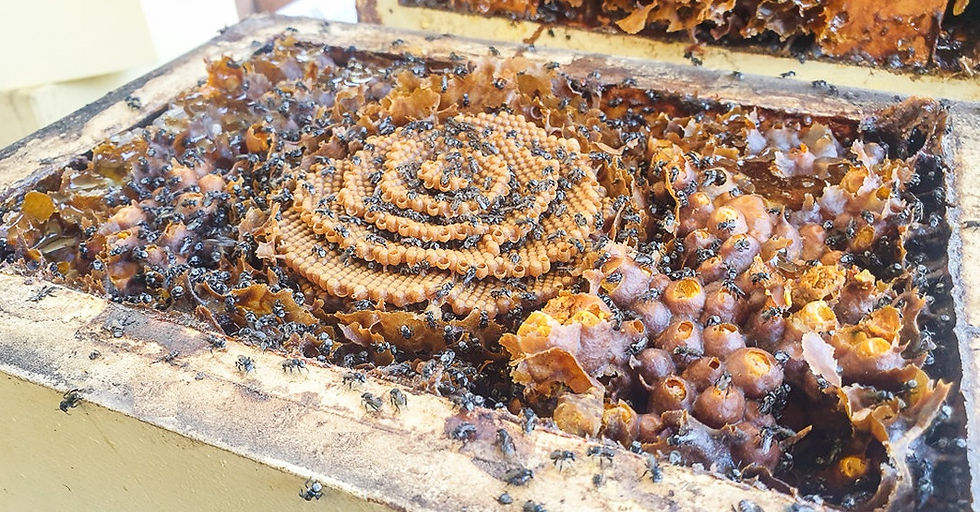
Few insects other than honeybees produce honey or honey-like substances as part of their life cycle. Below, I outline these insects, describe their honey production, and identify which are used commercially by humans, with each section tailored to your query and kept concise.
Bumblebees (Bombus spp.)
Honey Production: Bumblebees produce small amounts of a honey-like substance by regurgitating and storing nectar in wax pots within their nests. This “bumblebee honey” is less viscous and sweeter than honeybee honey, used to feed the colony, especially larvae and the queen.
Details: The quantity is minimal (a few grams per nest) due to smaller colony sizes (50–400 bees) and short-term storage needs. It’s not stored long-term like honeybee honey.
Stingless Bees (Meliponini tribe, e.g., Melipona, Trigona spp.)
Stingless bees,
Native to tropical regions (e.g., Central/South America, Australia), they produce honey by collecting nectar, enzymatically processing it, and storing it in ceramic-like pots. Their honey is runnier, tangier, and often more acidic than honey produced by honeybees, with unique floral notes.
Details: Colonies yield 0.5–5 kg of honey annually, depending on species and environment. Honey is highly valued for its distinct flavour and medicinal properties in local cultures.
Honey Wasps (Brachygastra spp., Polybia spp.)
Certain tropical wasps.
Like Mexican honey wasps, they collect nectar and produce a honey-like substance stored in paper-like nest cells. The honey is similar to honeybee honey but smaller in quantity and often mixed with pollen or larval secretions.
Details: Production is limited (grams per nest) due to small colony sizes and seasonal activity. The honey serves as food for larvae and adult wasps, primarily in Central and South America.
Honey Ants (e.g., Myrmecocystus spp.)
Honey ants store nectar in the swollen abdomens of specialised workers called repletes, acting as living storage units. The nectar is regurgitated and shared with the colony, resembling a crude honey-like substance.
Details: Found in arid regions (e.g., Australia, North America), they store small amounts (microliters per replete) for colony survival during scarcity. The “honey” is not true honey but a sugary liquid.
Insects Used Commercially by Humans
Stingless Bees:
Stingless bee honey is harvested commercially in tropical regions, particularly in Brazil, Mexico, and Australia. Known as “melipona honey,” it’s prized for its unique flavour and purported medicinal benefits (e.g., antimicrobial properties). Small-scale farmers and indigenous communities sell it in local markets or to specialty retailers, fetching $20–$100 per litre due to low yields and high demand.
Why: High market value and cultural significance drive commercial interest, though production is limited compared to honeybee honey (hundreds of thousands of tons globally).
Honeybees (Apis spp.):
Honeybees (primarily Apis mellifera) dominate commercial honey production, yielding 1.9 million tons annually worldwide. Their honey is harvested from hives using wax or plastic foundations, processed, and sold globally in forms like raw, filtered, or creamed honey. Beekeepers also sell beeswax, propolis, and venom (as noted previously).
Why: Large colony sizes, high yields (20–100 kg per hive), and efficient hive management make honeybee honey the most economically viable.
Others (Bumblebees, Honey Wasps, Honey Ants):
These insects are not used commercially for honey. Bumblebee honey is too scarce (grams per nest) and difficult to harvest. Honey wasp honey is consumed locally in small amounts by indigenous groups, but lacks commercial scale due to low yields and nest inaccessibility. Honey ant “honey” is eaten traditionally (e.g., by Australian Aboriginal communities) but isn’t commercially harvested due to tiny quantities and labour-intensive collection.
Why: Low production and logistical challenges make them unviable for commercial markets.
Key Notes for Beekeepers
For backyard beekeepers, focusing on honeybee or stingless bee honey is most practical. Stingless bees are viable in tropical climates but require specialised hives and lower yields, making them less beginner-friendly than honeybees.
Community Relations: When selling hives (as discussed previously), highlighting honey’s ecological and medicinal value (e.g., stingless bee honey’s antimicrobial properties) can build neighbour support, especially if sharing samples. Joining beekeeping associations provides access to markets for specialty honeys.
Recommendation: Stick to honeybees for commercial honey due to higher yields and established practices. Explore stingless bees if in a tropical region and connected to niche markets.
Helpful Video References:
The Many Benefits of Stingless Bee Honey | Novita Listyani.8.45 min
Gardening Australia Native Bees. Andrew Locke. 7.29 min


Comments